
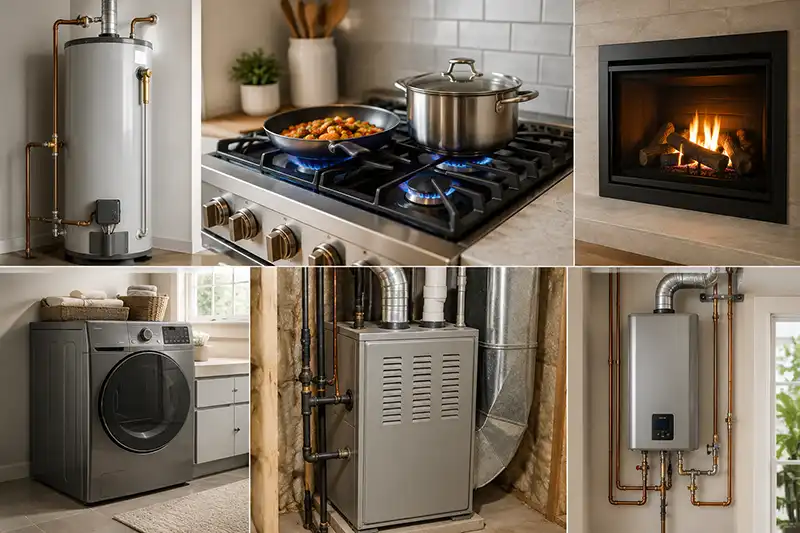
Gas appliances remain common in California homes, providing reliable cooking, water heating, clothes drying, and space heating. Natural gas and propane appliances can be convenient and efficient, but they also require proper installation, ventilation, maintenance, and safe operation.
California also has specific energy requirements that homeowners and contractors should understand when installing or replacing gas appliances. Whether you’re upgrading an existing appliance or building a new home, understanding these requirements can help you make informed decisions and keep your plumbing and gas systems operating safely.
Common Gas Appliances in California Homes
Several household appliances can operate using natural gas or propane. Common examples include:
Gas water heaters
Gas ranges and cooktops
Gas ovens
Gas clothes dryers
Gas furnaces
Gas fireplaces
Pool and spa heaters
Each appliance has different installation, ventilation, clearance, and fuel-supply requirements. Appliances should always be installed and operated according to the manufacturer’s instructions and applicable local requirements.
California’s current energy standards also regulate certain gas equipment. For example, the 2025 California Energy Code includes requirements related to gas appliances and electric-ready infrastructure in certain newly constructed buildings.
California’s Electric-Ready Requirements
California is encouraging greater flexibility for future electrification. Under the 2025 Energy Code, certain newly constructed single-family homes that install gas or propane appliances for space heating, water heating, cooking, or clothes drying must meet electric-ready requirements. These provisions are intended to make future conversion to electric equipment more feasible.
This doesn’t mean every existing California home must immediately replace its gas appliances. Requirements can depend on the type of project, building, appliance, and applicable code provisions. Homeowners planning new construction or significant remodeling should consult qualified professionals about the requirements that apply to their specific project.
Are new gas appliances banned starting in 2030 in California?
- Target appliances: Natural gas furnaces and water heaters.
- The rule: Retailers and contractors cannot sell or install new gas-burning models once the phase-in begins.
- No forced removal: Existing working gas appliances can stay until they fail.
- Stoves and cooktops: Statewide sales bans do not target gas kitchen stoves by 2030, though some local cities restrict gas lines in new construction.
Regional Air District Rules
- Bay Area: The Bay Area Air Quality Management District adopted zero-NOx rules effectively phasing out new gas water heater sales by 2027 and gas furnaces by 2029.
- Statewide (CARB): The broader state framework targets the 2030 window for zero-emission home heating and hot water compliance.
Gas Appliance Safety Matters
Proper installation and maintenance are important because fuel-burning appliances can produce carbon monoxide (CO). Carbon monoxide is a colorless, odorless, poisonous gas that can result from incomplete combustion. The U.S. Consumer Product Safety Commission recommends that fuel-burning appliances be installed and operated according to manufacturer instructions and local building codes and that most appliances be installed by qualified professionals.
California’s Air Resources Board also recommends having gas and other combustion appliances professionally inspected, cleaned, and adjusted annually. Proper venting is particularly important because ventilation problems can allow combustion pollutants to accumulate indoors.
Watch for Signs of a Gas Appliance Problem
Homeowners should pay attention to changes in appliance performance. Potential warning signs can include unusual odors, unusual noises, damaged components, poor heating performance, repeated shutdowns, visible soot, or problems with venting.
A gas appliance that isn’t operating correctly should be evaluated by a qualified professional. Never attempt repairs to gas equipment if you don’t have the proper knowledge, training, and tools.
If you suspect a gas leak or your carbon monoxide alarm sounds, leave the building and move to fresh air. Do not attempt to locate the source of a suspected carbon monoxide problem yourself. The CPSC recommends contacting emergency services and having the suspected appliance professionally inspected before it is used again.
Proper Ventilation Is Essential
Proper ventilation helps combustion appliances operate safely. California’s Proposition 65 guidance notes that some natural-gas appliances, including ranges, dryers, and water heaters, can emit chemicals such as carbon monoxide and formaldehyde during operation, with greater potential exposure when appliances are improperly vented.
Homeowners should never block appliance vents or modify ventilation systems without professional guidance. Kitchen ranges and cooktops should be used with a range hood or exhaust fan that vents outdoors when possible, and manufacturers’ ventilation requirements should always be followed.
Gas Water Heaters and Plumbing Systems
Gas water heaters are one of the most important gas appliances connected to a home’s plumbing system. A properly installed water heater requires appropriate gas connections, water connections, venting, temperature and pressure protection, and other safety components.
If your gas water heater is leaking, producing inadequate hot water, repeatedly shutting down, or showing other signs of trouble, professional diagnosis can help determine whether repair or replacement makes sense.
California’s energy standards also contain requirements for regulated water-heating equipment, including certification and applicable efficiency standards.
When Should You Have a Gas Appliance Inspected?
Professional inspection is particularly important when:
Installing a new gas appliance
Replacing an existing gas appliance
Remodeling a kitchen or utility area
Changing an appliance from one fuel type to another
Experiencing unusual appliance operation
Suspecting a gas leak
Discovering damaged or disconnected venting
Purchasing a home with older gas appliances
An inspection can help identify installation, combustion, venting, or equipment problems before they become more serious.
Choosing the Right Professional
Gas appliance work involves more than simply connecting an appliance to a gas line. The installation must account for the appliance manufacturer’s requirements, gas supply, ventilation, clearances, plumbing connections where applicable, and applicable building and energy codes.
For California homeowners, working with qualified professionals is an important part of maintaining a safe and properly functioning home.
If you need gas line work, gas appliance connections, water heater service, or other residential plumbing services, Small Jobs Plumbing Inc. can help evaluate your home’s plumbing and gas-related needs. Contact a qualified professional to discuss your project and determine what installation or repair requirements apply.