
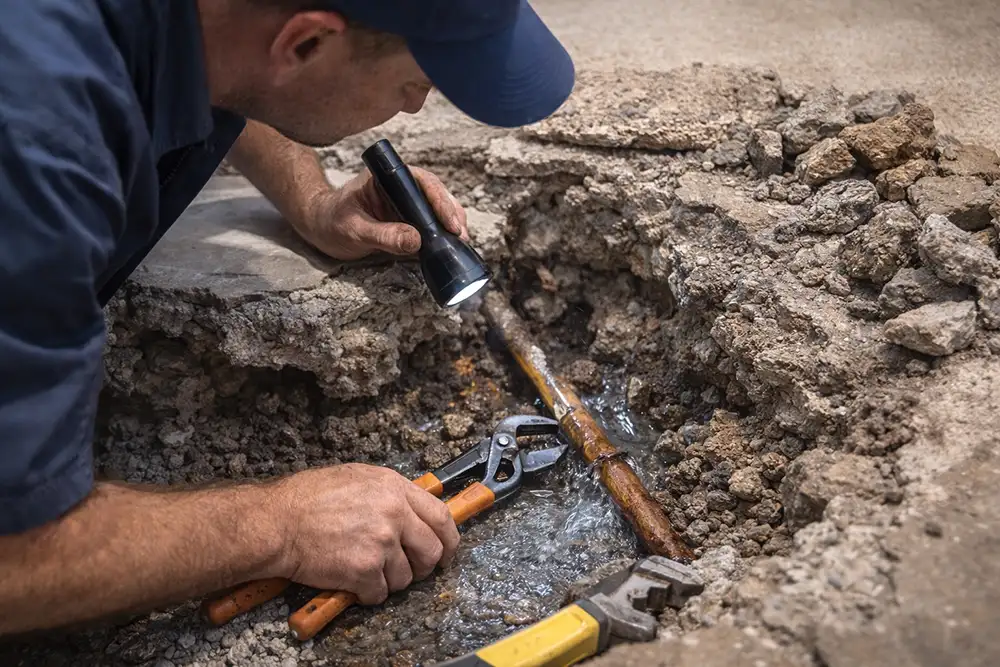
A slab leak is one of the most serious plumbing issues a homeowner can face. Because it occurs beneath the concrete foundation of your home, it can go unnoticed for weeks or even months while causing significant damage. Left untreated, a slab leak can weaken your foundation, increase water bills, and lead to mold growth. Knowing how to detect and fix a slab leak early can save you time, money, and stress.
What Is a Slab Leak?
A slab leak happens when a water line running beneath your home’s concrete slab develops a leak. These pipes can crack, corrode, or shift due to soil movement, poor installation, or natural wear over time. Since they are hidden beneath the foundation, slab leaks are not always easy to spot without knowing the warning signs.
Common Signs of a Slab Leak
Recognizing the early signs of a slab leak is key to preventing major damage. One of the most noticeable indicators is an unexplained increase in your water bill. If your usage hasn’t changed but your bill keeps rising, a hidden leak may be the cause.
You might also notice warm or damp spots on your floors, especially if the leak involves a hot water line. In some cases, homeowners hear the sound of running water even when all fixtures are turned off.
Cracks in walls or flooring, a sudden drop in water pressure, or the presence of mold and mildew can also signal a slab leak. These issues should never be ignored, as they often point to a deeper problem beneath your home.
How to Confirm a Slab Leak
If you suspect a slab leak, there are a few steps you can take to confirm it. Start by checking your water meter. Turn off all water in your home and monitor the meter. If it continues to move, there is likely a leak somewhere in your system.
You can also perform a simple pressure test or use leak detection dye, but these methods may not pinpoint the exact location. Professional plumbers use advanced tools such as electronic leak detection equipment, acoustic listening devices, and thermal imaging to accurately locate slab leaks without unnecessary digging.
Causes of Slab Leaks
Understanding what causes slab leaks can help you prevent them in the future. One common cause is pipe corrosion, especially in older homes with metal plumbing. Soil movement due to shifting ground or earthquakes can also put pressure on pipes, causing them to crack.
Poor installation, abrasive soil conditions, and high water pressure can further contribute to pipe damage over time. Identifying the root cause is essential for choosing the right repair method.
How to Fix a Slab Leak
Fixing a slab leak requires careful planning and the right approach. The best solution depends on the severity of the leak, the location of the pipe, and the overall condition of your plumbing system.
One option is spot repair, which involves breaking through the concrete slab to access and repair the damaged pipe. This method is effective for isolated leaks but can be disruptive to your home.
Another option to fix a slab leak is pipe rerouting. Instead of repairing the pipe under the slab, a plumber installs new piping through walls or ceilings, bypassing the damaged section entirely. This is often recommended when multiple leaks are present or when the existing pipes are deteriorating.
In some cases, epoxy pipe lining can be used to seal small leaks internally without excavation. This minimally invasive method works well for certain types of damage but may not be suitable for all situations.
Why Professional Help Matters
Slab leaks are not a DIY-friendly problem. Attempting to fix a slab leak without the proper tools and expertise can lead to further damage and higher repair costs. Professional plumbers have the experience and equipment needed to locate and repair leaks efficiently while minimizing disruption to your home.
They can also assess your entire plumbing system to ensure there are no additional issues that could cause future leaks.
Preventing Future Slab Leaks
While not all slab leaks can be prevented, there are steps you can take to reduce the risk. Regular plumbing inspections can catch early signs of wear or corrosion. Maintaining proper water pressure and installing a pressure regulator can also help protect your pipes.
If your home has older plumbing, consider upgrading to more durable materials that are less prone to corrosion and damage.
Final Thoughts
A slab leak is a serious issue that requires prompt attention. By recognizing the warning signs, confirming the problem, and working with a professional plumber, you can protect your home from costly damage. Early detection and proper repair are the keys to maintaining a safe, efficient plumbing system and preserving the integrity of your foundation.